

A decade ago, the oldest of India’s gen z were teenagers and the youngest were barely in school. They couldn’t vote, they didn’t earn money of their own, they had no organized voice. Treating them as a rounding error when it came to market segments wasn’t really neglect. It was arithmetic. Politically they were assumed to be apathetic and terminally online; economically they were dependents rather than a market segment of their own.
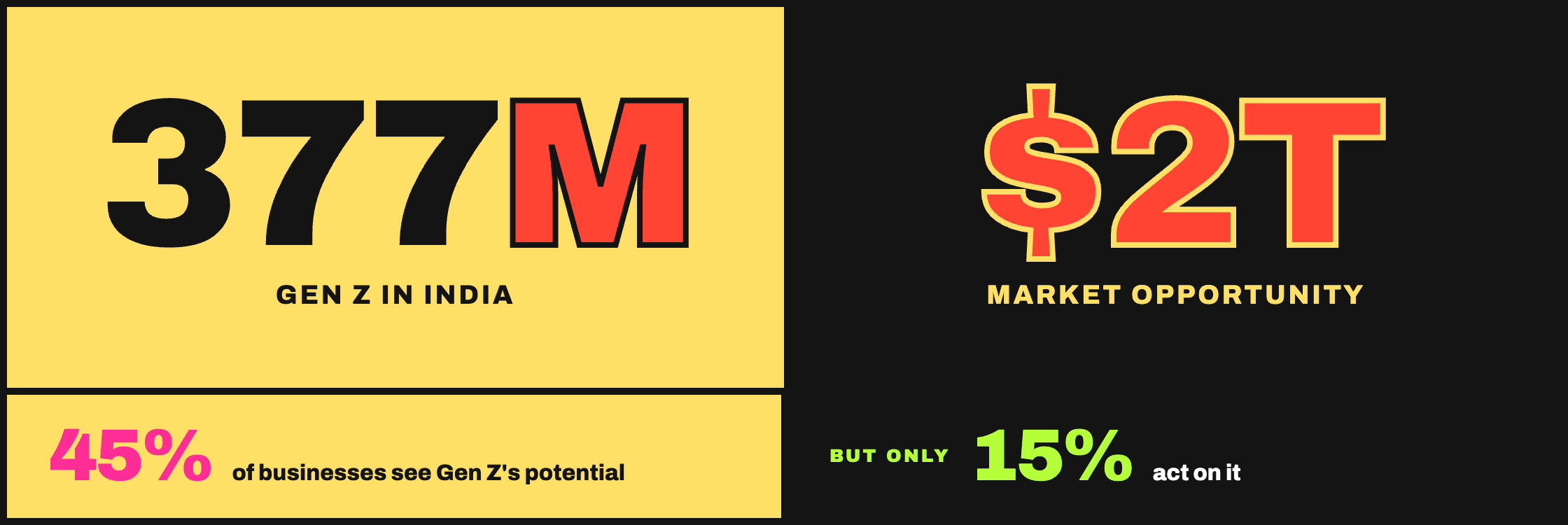
Now, they’re grown up. Over the past month they’ve made it clear they’re not political pushovers. A leaderless, phone-native cohort pushed the government into a response it plainly didn’t want to give. Which makes this a good moment to ask the same question on the commercial side: is this a generation any business can truly afford to ignore any longer?
Recently I read something by Venkatesh Rao about the language each generation attaches to money and wealth.
We can debate whether “get your bag” is truly gen z or late-millennial-coded, but there’s no doubt that for India’s gen z the sentiment applies. A generation that reads outcomes as rigged and random doesn’t defer to a distant, aspirational payoff; it wants the certain, present thing, and it trusts peers and luck over institutions and brands.
It would be easy to read a get-your-bag, casino-ish relationship to money as unseriousness: impulsive, disloyal, not worth building around. That is probably a mistake, because every generation ages. Businesses have understood this logic for decades and keep trying to reach customers earlier, before their habits harden. Think Microsoft, which has for decades seeded schools and universities with cheap software precisely so a generation would grow up using its products and be wedded for life.
Irrespective of how unattractive gen z might look as a customer cohort today, the fact of the matter is that they are going to be the largest generation globally. In India, they already are. They will age into the bulk of the earning and spending customer base. It is therefore imperative for businesses to understand and shape this cohort’s taste early. That means both rethinking how to reach them, because the deferred, aspirational pitch falls flat on a generation that reads the future as rigged.
What winning them over looks like is not, mostly, a price war but a set of smarter moves. The place to start is the culture they already swim in, which is globally shaped precisely because they’re so online. A few themes stand out.
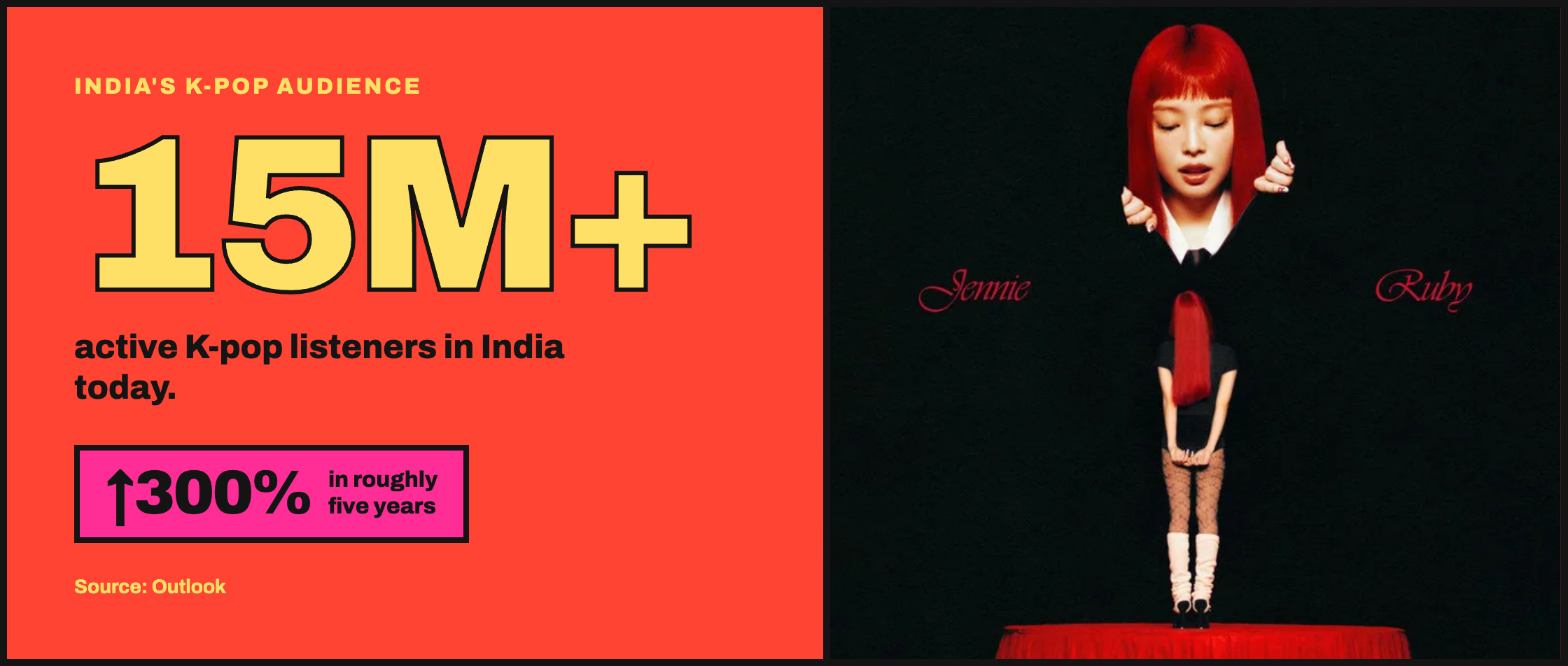
The first is riding a broader global phenomenon. My four-year-old's favourite soundtrack for the past year has been KPop Demon Hunters, the same as just about any small kid's in London or San Francisco; she knows every song by heart and is already picking up aesthetic cues from the music and the looks. She's obviously not the audience I'm talking about here, but the cross-border permeability of K-culture is what I find fascinating. In India it has been huge, with more than 15 million active K-pop listeners, up roughly 300% in five years, and Korean brands now entering the market directly. The point I actually care about isn't Korean culture itself, it's what brands can build on top of a global phenomenon that shapes taste and aesthetics. Beauty is the clearest place to look. Korean products pioneered a very particular aesthetic and some genuinely new formulations, and what I find interesting is what companies do to adapt that. Rare Beauty is my favourite example: it took a very Korean idea, the lightweight blush that sets to a soft, blurred finish, and pushed the pigment and colour payoff well past the pale Korean wash into something bolder that suited its own audience. In India I don't see that yet. Our makeup brands aren't doing anything especially interesting with formulation, let alone building an Indian take on top of the Korean one. MAC still seems to be the gold standard. In skincare there has definitely been some interesting stuff. (I particularly like Aminu, in which Nykaa just purchased a big stake, and to my eye it is a bit K-coded).
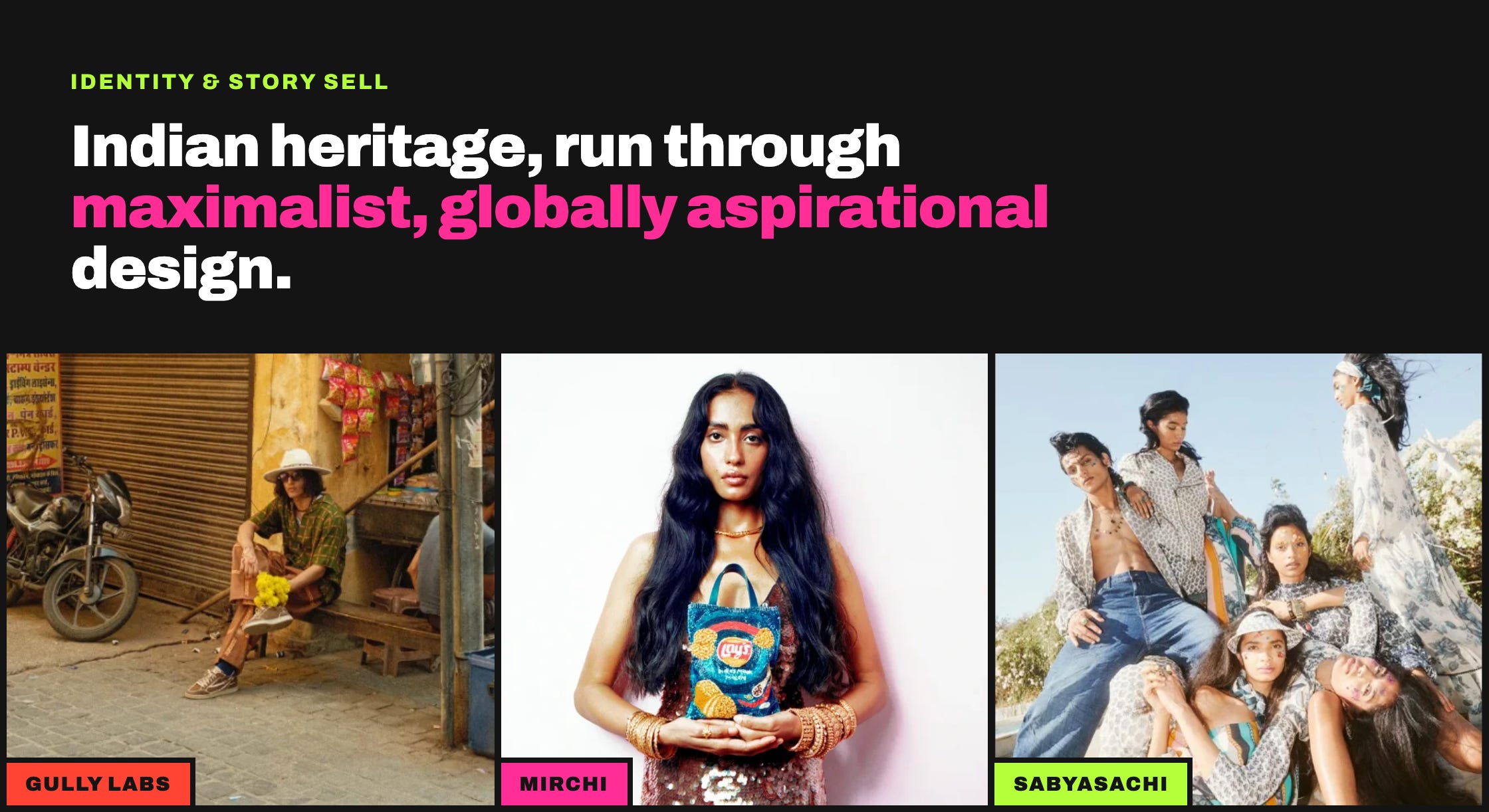
The second is identity and story, which this cohort is much more alive to. Though their taste runs global, they clearly are on the look out for a deeply resonant story that speaks to their own identity as Indians. I believe part of this is their own confidence as Indians and the desire to see that reflected in brands / products. The second is the rise of a globally influential and wealthy desi diaspora that has become a significant economic and political minority in many major geographies and their desire of the young uns to connect with the homeland (but not in a Indian of the socialist era sense). Gully Labs is a great example: it sells ₹6,000 sneakers built on Indian street identity, "culturally Indian yet globally aspirational" in the founder's words, and has gone from selling 20 pairs a month to thousands, with about a quarter of its sales now abroad. Every time I have visited the Gully Labs flagship in Delhi I have been struck by how young the customer base is, and by how it centers design and meaning, with people lining up to customize their sneakers, ghungroos included. Dhruv Kapoor has the same instinct: Indian heritage run through maximalist, gender-fluid streetwear, shown in Milan, now with a cheaper line. The designs are cool and funky, not Indian in the obvious, quintessential way but with a clear but subtle hint of it. What makes these brands aspirational is the aesthetic and point of view they carry, not any any obvious signal of luxury.
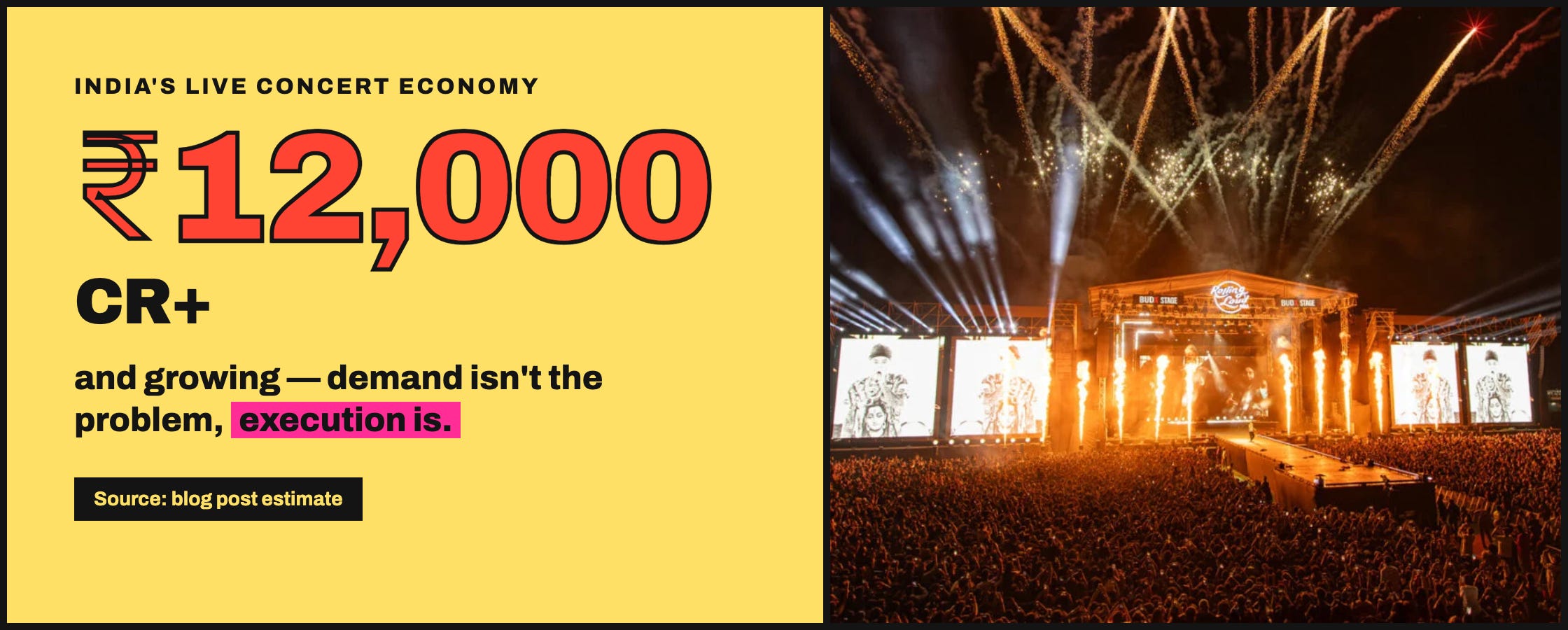
The third is that, more and more, the experience itself is the product. Travel is is the best example, but specifically it is the whole business of going somewhere to feel part of something. Whether its the offbeat trip, the festival or the live gig - they are all a part of this trend. It is entirely believable that a gen zer will cross the country for a concert or plan a holiday because of the hostel or hotel rather than the other way round. They also seemingly have no qualms in borrowing to do it. The catch is that in India the experience is only ever as good as the last mile, and the last mile is usually broken. The concert economy is already worth over ₹12,000 crore, yet organisers pretty much rebuild the venue from scratch at almost every show. You can pay top prices to attend a show but spend two hours getting out of the car park. District, Eternal’s going-out app for dining, movies and live events, scales the discovery and booking beautifully but owns none of the venue, so a glitch on the ground is entirely outside its hands. Clearly demand is not the problem, but execution is. So the question is whether companies can control an experience without owning it, or whether in India control is imperative to own the experience. Regardless, the value has moved into culture and experience, and the businesses that win this cohort will be the ones that work out how to deliver and end-to-end experience at India's actual scale.
The biggest challenge for businesses right now is moving away from thinking of gen z as a consumer class that doesn't have money, toward thinking about how they can be monetized, how they can be engaged, and how loyalty can be built with a generation of this size. They are, after all, the largest, most connected and fastest-rising consumer base the country has ever produced, and their taste and preferences are being set right now. We don't know exactly how gen z will evolve, but it is very hard to argue that you can ignore an entire cohort of this scale and remain standing.
Population, workforce and consumption figures from Snap Inc. × BCG, "The $2 Trillion Opportunity: How gen z Is Shaping the New India" (2024); salary data from PLFS 2025 (via Playroll). K-pop listenership via Outlook; K-beauty market data and brand examples via Entrackr. The "83% take pride in Indian-origin brands" figure from the ET × Snapchat gen z Index (with Kantar); gen z borrowing data from Outlook, "gen z's Silent Debt Trap" (citing TransUnion CIBIL and Home Credit). Gully Labs via Inc42.
I think District has made a move in the direction of owning a venue, at least one on the outskirts of Bangalore. District Arena - the infra to get there obvsly is non-existent but the intention exists or has made some headway in that direction.